
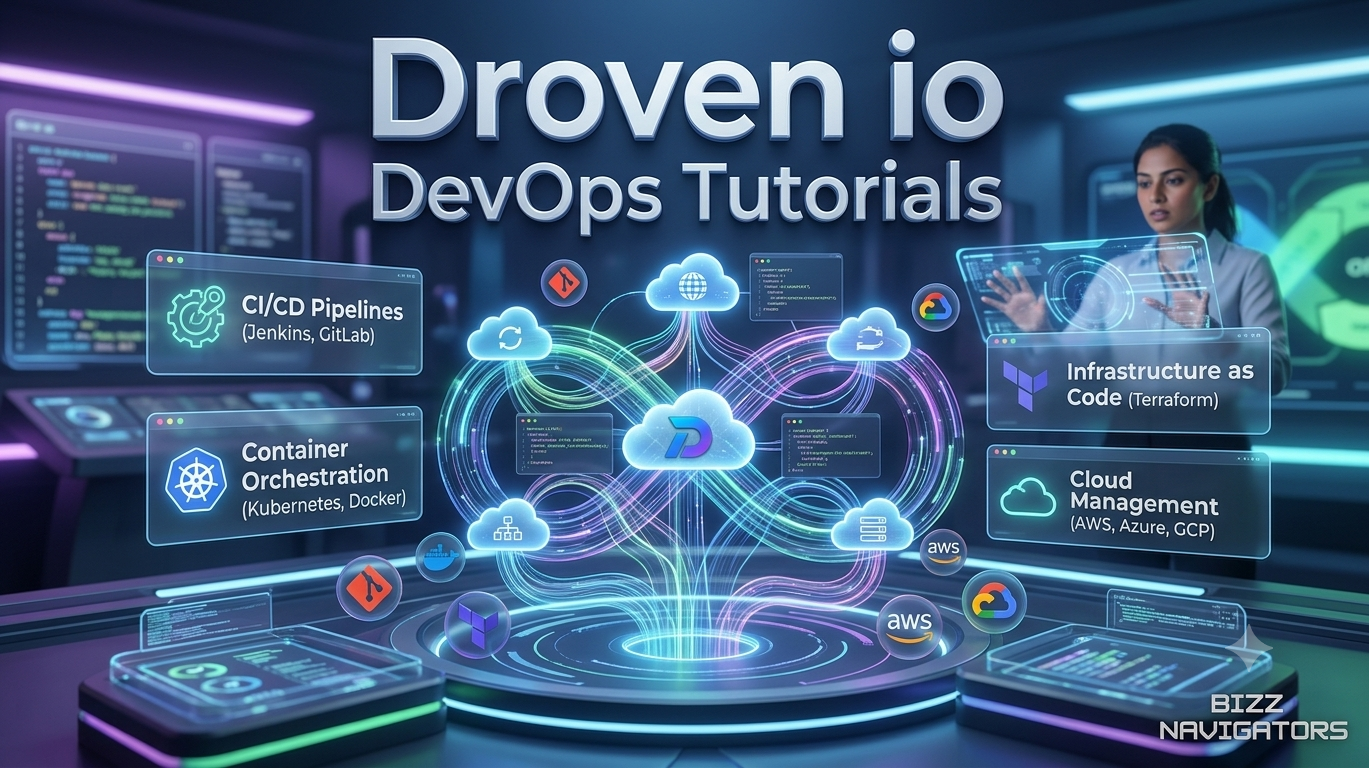
Technology changes fast. Businesses need to build, test, and release software quickly without losing quality. This is where Driven.io DevOps becomes important. It helps development and operations teams work together. The result is faster software delivery, better teamwork, and more reliable applications.
Companies of every size use DevOps to improve productivity and reduce downtime. By automating tasks and improving communication, teams can release updates more often while keeping systems stable. Whether you are a business owner, software developer, or IT professional, understanding Driven.io DevOps can help you stay ahead in today’s digital world.
In this guide, you will learn what Driven.io DevOps is, why it matters, its core practices, popular tools, benefits, challenges, and best practices for long-term success.
Biography Table
| Information | Details |
|---|---|
| Topic | Driven.io DevOps |
| Category | DevOps & Cloud Technology |
| Industry | Software Development |
| Focus | CI/CD, Automation, Cloud Infrastructure |
| Purpose | Faster and Reliable Software Delivery |
| Target Audience | Developers, IT Teams, Businesses |
| Core Technologies | Cloud, Containers, Automation, Monitoring |
| Popular Platforms | AWS, Azure, Google Cloud |
| Main Benefit | Faster Development and Deployment |
Profile Table
| Feature | Description |
|---|---|
| Development Approach | Agile and DevOps |
| Automation | High |
| Continuous Integration | Supported |
| Continuous Delivery | Supported |
| Infrastructure Management | Automated |
| Monitoring | Real-Time |
| Security | DevSecOps Integration |
| Scalability | Excellent |
| Collaboration | Strong Team Communication |
| Cloud Support | Multi-Cloud Ready |
What Is Driven.io DevOps?
Driven.io DevOps is a modern approach that combines software development and IT operations into one collaborative workflow. Instead of working in separate teams, developers and operations engineers share responsibility for building, testing, deploying, and maintaining applications.
This approach focuses on automation, continuous improvement, and fast feedback. Every stage of software development becomes more efficient through automated testing, deployment pipelines, and monitoring systems.
The goal is simple. Deliver high-quality software faster while maintaining security and reliability.
Why Driven.io DevOps Matters
Modern customers expect applications to work all the time. They also expect regular updates and new features. Traditional software development methods often struggle to meet these expectations.
Driven.io DevOps helps organizations reduce delays by automating repetitive tasks and improving communication between teams. Developers receive quick feedback about code quality, while operations teams gain better visibility into system performance.
This creates a smoother software delivery process with fewer errors and faster recovery from problems.
Key Principles of Driven.io DevOps
Several important principles support a successful DevOps strategy.
Collaboration
Development and operations teams work together from the beginning of each project. Shared goals improve communication and reduce misunderstandings.
Automation
Automation handles repetitive work such as testing, deployments, infrastructure setup, and configuration management.
Continuous Integration
Developers merge code frequently into a shared repository. Automated tests quickly detect issues before they become larger problems.
Continuous Delivery
Applications stay ready for deployment at any time. Updates become smaller, safer, and easier to release.
Continuous Monitoring
Monitoring tools collect data about application health, performance, and user experience. Teams can solve issues before customers notice them.
Benefits of Driven.io DevOps
Organizations experience many advantages after adopting DevOps practices.
One major benefit is faster software delivery. Automation reduces manual work and shortens release cycles.
Quality also improves because automated testing catches bugs early. Smaller releases reduce deployment risks and simplify troubleshooting.
Better collaboration creates stronger teamwork. Everyone shares responsibility for product success instead of working in isolated departments.
Customer satisfaction increases because updates arrive more frequently and systems remain more stable.
Essential DevOps Tools
Many tools support the DevOps lifecycle.
Git manages source code versions.
Jenkins automates software builds and deployments.
Docker packages applications into portable containers.
Kubernetes manages containerized applications across multiple servers.
Terraform automates cloud infrastructure.
Ansible simplifies configuration management.
Prometheus monitors application performance.
Grafana creates visual dashboards for system metrics.
Each tool solves a specific challenge while working together as part of a complete DevOps workflow.
CI/CD in Driven.io DevOps
Continuous Integration and Continuous Delivery are central parts of DevOps.
Developers submit code changes regularly. Automated systems immediately build the application and run tests. If everything passes, the software becomes ready for deployment.
This process reduces human error and speeds up software releases. Teams can deploy new features several times each day without disrupting users.
CI/CD also improves confidence because every release follows the same tested process.
Cloud Computing and DevOps
Cloud platforms have transformed modern software development.
Services from Amazon Web Services, Microsoft Azure, and Google Cloud provide flexible infrastructure that grows with business needs.
Cloud computing allows teams to create development environments quickly without purchasing expensive hardware.
Driven.io DevOps works well with cloud services because infrastructure can be automated using code instead of manual setup.
This improves consistency and reduces deployment errors.
Security in DevOps
Security should be included throughout the development process instead of waiting until the end.
DevSecOps integrates security testing into every stage of software development.
Automated security scans identify vulnerabilities before deployment.
Access controls protect sensitive systems.
Regular updates keep software protected from new threats.
Security becomes everyone’s responsibility rather than belonging to only one department.
Infrastructure as Code
Infrastructure as Code allows servers, networks, and cloud resources to be managed through configuration files.
Instead of manually creating infrastructure, teams write reusable templates.
Tools such as Terraform and Ansible automate environment creation.
This approach improves consistency across development, testing, and production systems.
It also makes disaster recovery faster because environments can be rebuilt automatically.
Monitoring and Performance
Successful DevOps does not stop after deployment.
Applications require continuous monitoring to maintain high performance.
Monitoring systems track CPU usage, memory consumption, network activity, response times, and error rates.
Real-time alerts notify engineers about unusual activity before customers experience problems.
Performance reports also help teams identify opportunities for future improvements.
Challenges of Implementing Driven.io DevOps
Every organization faces challenges during adoption.
Some employees may resist changing existing workflows.
Older systems may not support automation easily.
Training requires time and investment.
Organizations must also choose the right tools without creating unnecessary complexity.
Leadership support, clear planning, and ongoing education help overcome these obstacles.
Best Practices for Successful DevOps
Organizations can improve results by following proven best practices.
- Build a collaborative culture.
- Automate repetitive processes.
- Use version control for all code.
- Implement Continuous Integration and Continuous Delivery.
- Monitor systems continuously.
- Include security from the beginning.
- Document important processes.
- Review performance regularly.
- Encourage continuous learning.
- Improve workflows based on feedback.
These practices help create reliable and efficient software delivery pipelines.
The Future of Driven.io DevOps
DevOps continues to evolve as technology advances.
Artificial intelligence is helping automate testing, monitoring, and incident detection.
Machine learning improves performance analysis by identifying unusual patterns before they become major issues.
Serverless computing reduces infrastructure management while containers continue to simplify application deployment.
Organizations that invest in automation, cloud technologies, and continuous improvement will be better prepared for future software development challenges.
Conclusion
Driven.io DevOps helps organizations build better software through collaboration, automation, and continuous improvement. By combining development and operations into one efficient workflow, businesses can deliver reliable applications faster while reducing costs and improving customer satisfaction.
Whether your organization is beginning its DevOps journey or expanding existing practices, focusing on automation, security, cloud infrastructure, and continuous learning will create a strong foundation for long-term success.
Frequently Asked Questions
1. What is Driven.io DevOps?
Driven.io DevOps is a modern software development approach that emphasizes collaboration, automation, continuous integration, continuous delivery, and monitoring to improve software quality and delivery speed.
2. What are the main benefits of Driven.io DevOps?
It offers faster deployments, improved software quality, stronger team collaboration, better security, increased automation, and higher customer satisfaction.
3. Which tools are commonly used in DevOps?
Popular tools include Git, Jenkins, Docker, Kubernetes, Terraform, Ansible, Prometheus, and Grafana.
4. Why is CI/CD important?
CI/CD automates software building, testing, and deployment, allowing teams to release updates quickly and with fewer errors.
5. How does cloud computing support DevOps?
Cloud platforms provide scalable infrastructure, faster environment setup, automated resource management, and cost-efficient deployment options.
6. Is Driven.io DevOps suitable for small businesses?
Yes. Small businesses can adopt DevOps practices to improve software quality, reduce manual work, accelerate releases, and support future growth.