
Introduction
When evaluating any digital platform, service, or online solution, one of the first questions users ask is about BackToFrontShow pricing. Understanding pricing structures is essential because it directly affects budgeting, return on investment, and long-term usability. Whether you are an individual user, a content creator, a small business owner, or part of a larger organization, knowing how pricing works can help you make informed decisions before committing to a plan.
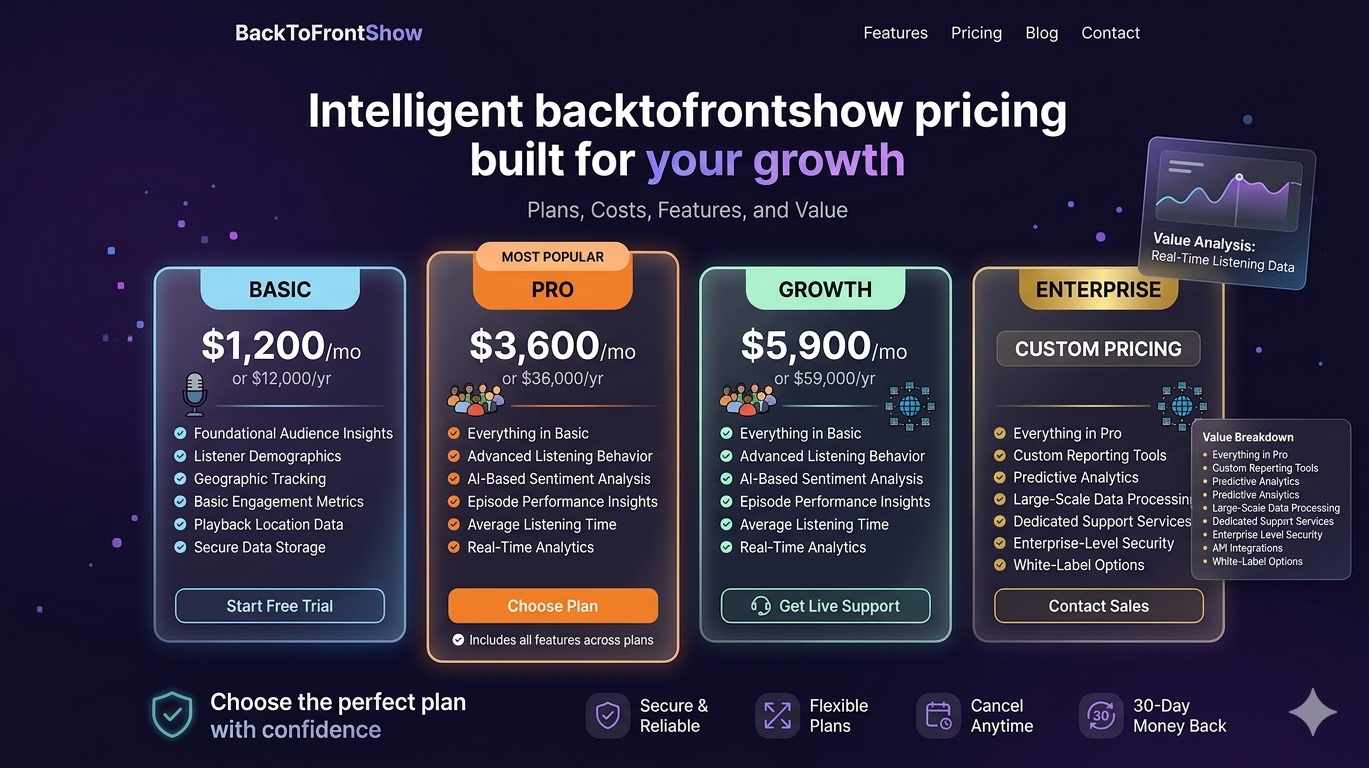
The topic of BackToFrontShow pricing has attracted growing interest as more users seek transparent information about subscription costs, included features, upgrade options, and overall value. This comprehensive guide explores pricing considerations, potential plan structures, cost factors, budgeting strategies, and feature comparisons. The goal is to provide a detailed and user-friendly resource that helps readers understand how pricing models typically work and what to evaluate before making a purchase decision.
BackToFrontShow at a Glance
Before analyzing BackToFrontShow pricing, it is important to understand the broader context of the platform or service. Users generally evaluate software, media platforms, and digital services based on usability, features, support quality, scalability, and affordability. Pricing becomes meaningful only when compared against the value users receive.
Many modern platforms structure their pricing around user needs, allowing customers to select plans that match their requirements. Entry-level packages usually target beginners, while premium tiers include advanced functionality for professionals and businesses. Understanding where your needs fit within that spectrum is often the first step toward choosing the most cost-effective option.
Quick Overview Table
| Category | Details |
| Main Topic | BackToFrontShow Pricing |
| Purpose | Understanding costs, plans, and value |
| Suitable For | Individuals, creators, businesses |
| Common Pricing Models | Monthly, annual, subscription-based |
| Key Evaluation Factors | Features, support, scalability, affordability |
| Important Consideration | Long-term value versus initial cost |
| Best Approach | Compare features before purchasing |
| Review Frequency | Check regularly for updated pricing |
Why BackToFrontShow Pricing Matters
Pricing is more than just a number on a sales page. Effective pricing reflects the balance between affordability and functionality. Users often focus solely on the lowest price, but experienced buyers consider the complete package, including customer support, upgrades, security, and future scalability.
When researching BackToFrontShow pricing, users should evaluate how the available features align with their goals. A lower-cost option may appear attractive initially, but missing features could require future upgrades. On the other hand, premium plans can sometimes deliver greater efficiency and better long-term value despite higher monthly costs.
Understanding Modern Pricing Models
Most digital platforms use several pricing models to serve different customer segments. These may include monthly subscriptions, annual plans, usage-based billing, or customized enterprise packages. Each model offers unique advantages depending on user requirements.
In the context of BackToFrontShow pricing, understanding these models helps users determine which structure aligns best with their budget. Subscription-based pricing provides predictable costs, while usage-based options allow flexibility for users with changing demands. Organizations often prefer custom pricing because it can be tailored to specific operational requirements.
Common Features Included in Entry-Level Plans
Entry-level plans are designed to provide access to essential tools without overwhelming users with advanced features. These plans often attract new customers who want to explore the platform before making a larger financial commitment.
When reviewing BackToFrontShow pricing, users should examine what features are available in the basic package. Common inclusions may involve core functionality, limited storage, standard support, and access to essential resources. Understanding these benefits helps determine whether a starter plan is sufficient for current needs.
Premium Plans and Advanced Functionality
Premium packages generally target users who require enhanced performance, expanded resources, and advanced customization options. These plans often include exclusive tools, priority support, additional integrations, and higher usage limits.
For many buyers researching BackToFrontShow pricing, premium plans become attractive once operational demands increase. While the monthly cost may be higher, the added functionality can significantly improve productivity and workflow efficiency. Evaluating feature-to-cost ratios is essential before upgrading.
Annual vs Monthly BackToFrontShow Pricing
One of the most common decisions users face involves choosing between monthly and annual billing. Monthly plans offer flexibility and lower upfront costs, making them ideal for testing a service before long-term commitment.
Annual subscriptions, however, frequently provide substantial discounts compared to monthly billing. When comparing BackToFrontShow pricing, users should calculate the yearly savings available through annual plans. These savings can become significant over time, especially for organizations managing multiple subscriptions.
Factors That Influence Pricing
Several factors contribute to pricing variations across different plans. User capacity, storage allocation, premium tools, support levels, security enhancements, and integration capabilities often affect overall costs.
Understanding these variables can help users evaluate BackToFrontShow pricing more effectively. Rather than focusing exclusively on subscription fees, it is important to consider the complete service package and determine which features provide the greatest value for specific use cases.
Comparing Features Against Cost
A feature comparison is one of the most valuable exercises when evaluating any pricing structure. Users should create a list of required features and compare them across available plans.
This approach makes BackToFrontShow pricing easier to understand because it highlights the direct relationship between cost and functionality. In many cases, mid-tier plans offer the strongest balance of affordability and features, making them attractive options for growing users and businesses.
Budget Planning for New Users
Budget planning is critical when selecting a subscription-based service. New users should establish a clear spending limit and identify the features they absolutely need before reviewing pricing options.
When assessing BackToFrontShow pricing, it can be helpful to separate essential requirements from optional enhancements. This strategy prevents overspending while ensuring that critical functionality remains available. Careful planning also reduces the likelihood of frequent plan changes.
How Businesses Evaluate Pricing Value
Businesses often use a different evaluation process than individual consumers. Rather than focusing solely on subscription costs, companies assess productivity gains, efficiency improvements, and long-term operational benefits.
For organizations considering BackToFrontShow pricing, return on investment is a major factor. If a platform saves employee time, streamlines workflows, or improves customer engagement, the value generated may far exceed the subscription expense.
Hidden Costs Users Should Consider
Many users focus on advertised prices while overlooking additional expenses that may arise over time. These can include add-on services, premium integrations, extra storage, or advanced support packages.
A thorough review of BackToFrontShow pricing should include an examination of any supplementary costs. Transparency is important because unexpected expenses can significantly impact the overall budget and reduce perceived value.
Scalability and Long-Term Affordability
Scalability plays an important role in pricing decisions. A plan that meets current requirements may become insufficient as usage grows, leading to future upgrades and higher costs.
Users researching BackToFrontShow pricing should consider long-term needs rather than immediate requirements alone. Selecting a plan with room for growth can reduce disruptions and help maintain consistent operational efficiency over time.
Customer Support and Pricing Tiers
Customer support is frequently tied to pricing levels. Basic plans may provide standard assistance, while premium subscriptions often include priority support channels and faster response times.
When comparing BackToFrontShow pricing, users should evaluate support quality alongside other features. Reliable support can save significant time and reduce frustration, especially when technical issues arise during critical operations.
Security Features and Subscription Value
Security is an increasingly important consideration in modern digital services. Advanced plans often include enhanced protection measures, user management controls, and additional compliance features.
As part of a complete evaluation of BackToFrontShow pricing, users should examine security offerings carefully. Strong security protections can help safeguard data and provide peace of mind, particularly for organizations handling sensitive information.
User Experience and Cost Justification
The overall user experience contributes significantly to perceived value. Platforms that offer intuitive interfaces, reliable performance, and streamlined workflows often justify higher pricing through improved efficiency.
Evaluating BackToFrontShow pricing becomes easier when users consider how much time and effort the platform can save. A superior user experience can often outweigh small differences in subscription costs.
Tips for Choosing the Right Plan
Selecting the right plan requires balancing budget constraints with functional requirements. Users should start by identifying essential features, expected usage levels, and growth projections.
When comparing BackToFrontShow pricing, it is wise to avoid purchasing features that will never be used. At the same time, selecting a plan that is too limited can result in costly upgrades later. Finding the right balance ensures maximum value.
Common Mistakes When Evaluating Pricing
Many buyers make decisions based solely on promotional offers or introductory discounts. While these incentives can be attractive, they should not replace a comprehensive evaluation of long-term costs and benefits.
Another common mistake in analyzing BackToFrontShow pricing is ignoring feature limitations. Users should carefully review plan details to ensure that usage restrictions, storage limits, and support levels align with their expectations.
Best Practices Before Purchasing
Before subscribing to any service, users should compare available plans, read documentation, review user feedback, and assess long-term affordability. A structured evaluation process helps reduce risk and improves decision-making.
For anyone investigating BackToFrontShow pricing, creating a comparison checklist can be extremely useful. Documenting required features, support expectations, and budget constraints provides a clear framework for selecting the most suitable option.
Future Trends in BackToFrontShow Pricing
Pricing strategies continue to evolve as digital platforms compete for customers. Subscription flexibility, personalized plans, usage-based billing, and bundled services are becoming increasingly common across the industry.
Looking ahead, BackToFrontShow pricing may reflect broader market trends that prioritize customization and customer value. Users should monitor updates regularly to stay informed about new plans, promotional opportunities, and feature enhancements that could affect overall affordability.
Conclusion
Understanding BackToFrontShow pricing requires more than simply comparing numbers. Effective evaluation involves examining features, support quality, scalability, security, long-term value, and overall user experience. By taking a structured approach, users can identify the plan that best aligns with their goals and budget.
Whether you are an individual exploring a new platform or a business seeking operational efficiency, a thorough analysis of BackToFrontShow pricing helps ensure informed decision-making. The best choice is not necessarily the cheapest plan but the one that delivers the strongest combination of functionality, reliability, and value over time.
Frequently Asked Questions (FAQs)
1. What is BackToFrontShow pricing?
BackToFrontShow pricing refers to the cost structure, subscription plans, and payment options associated with the platform or service.
2. Does BackToFrontShow offer multiple pricing plans?
Many modern platforms provide different pricing tiers to accommodate beginners, professionals, and enterprise users. Users should review current plan details directly from the official source.
3. Is annual billing cheaper than monthly billing?
In many cases, annual subscriptions provide discounts compared to monthly payments, making them more cost-effective over the long term.
4. What should I compare before choosing a plan?
Compare features, support options, storage limits, security tools, scalability, and total cost to determine overall value.
5. Are there any hidden costs to consider?
Users should review potential add-on fees, premium integrations, extra storage charges, and advanced support costs before subscribing.
6. How can businesses evaluate pricing value?
Businesses typically assess return on investment by considering productivity improvements, efficiency gains, and long-term operational benefits.
7. How often should I review BackToFrontShow pricing?
It is advisable to check pricing periodically because providers may introduce new plans, discounts, features, or promotional offers over time.
YOU ALSO LIKE TO READ EAT: General News LogicalShout